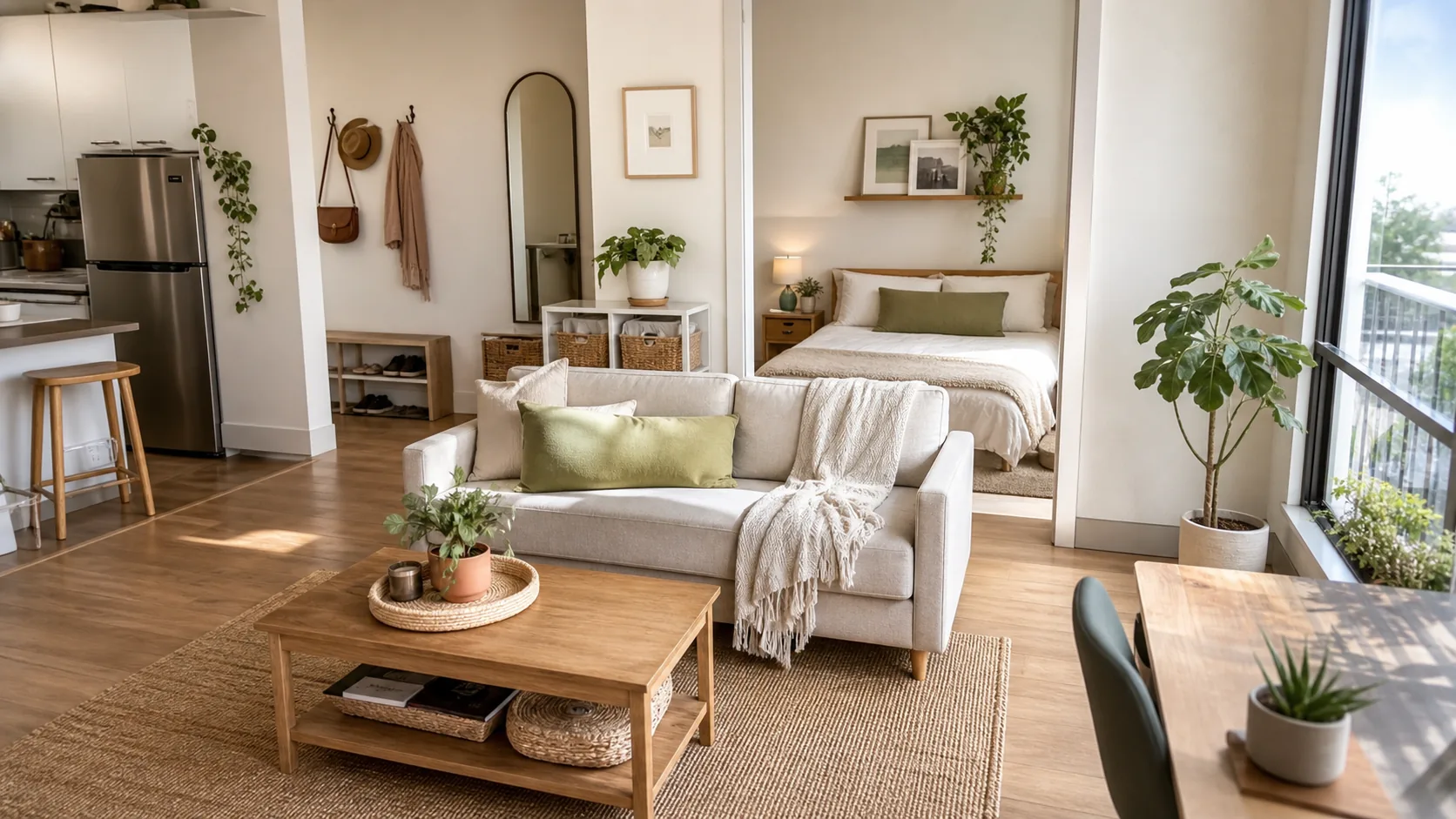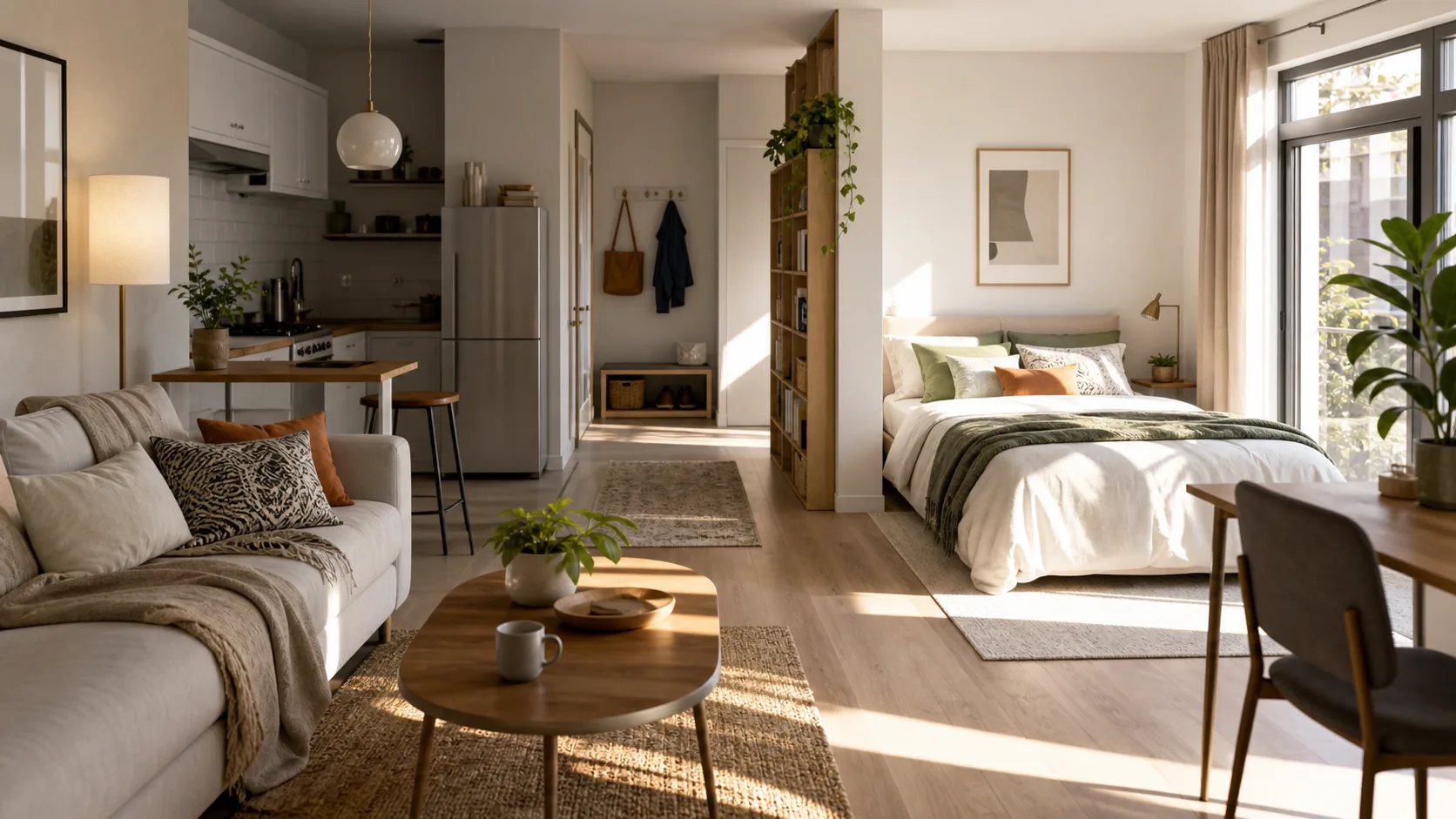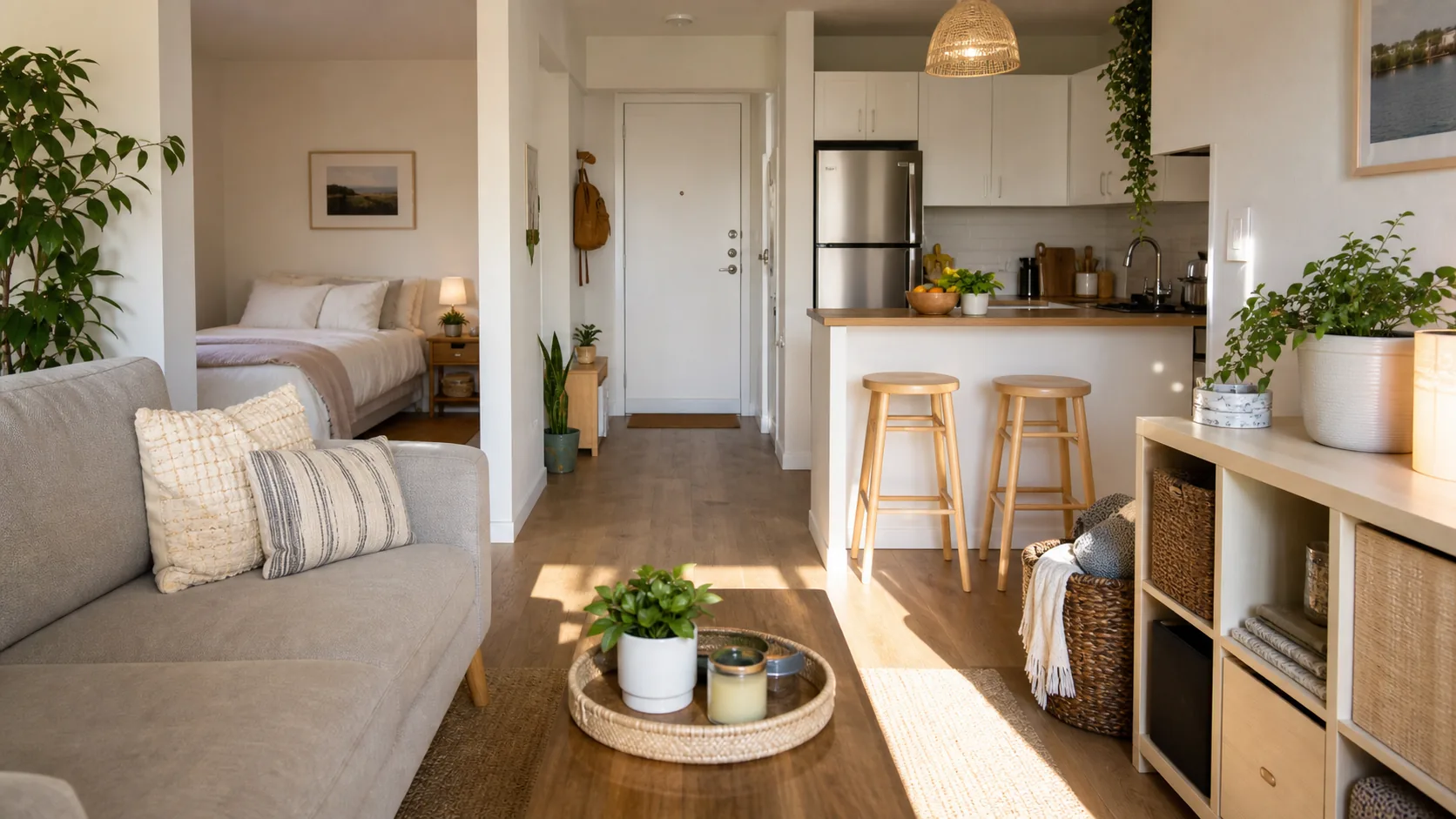
Record the fixed elements
A layout can look tidy in a floor plan and still fail when doors swing, chairs pull back and two people use the same passage. Record fixed elements first, then measure furniture at its widest operating position. Note the busiest thirty minutes of the day and the objects carried through the room.
For A First Layout Audit for a Small Home, turn the first two stages into a written check: record the fixed elements, then trace the busiest movement paths. Record what is fixed, what can move and which ordinary routine must become easier. Use the existing room before adding a product, and keep the test reversible until it has worked during a busy day.
For Initial Small Home Layout Audit, look at the apartment during the hour when the problem appears. Morning light reveals one set of needs; evening routines reveal another for this real estate topic. Notice where people naturally drop bags, where cords gather, which cabinet is avoided, which seat never gets used, and which surface attracts clutter. They show where beauty, organization, and health meet: better sleep, safer walkways, cleaner counters, less visual noise, and fewer decisions at the end of a long day.
Trace the busiest movement paths
Rank each route as essential, useful or occasional. Protect essential routes before adding storage, and move flexible pieces out of collision zones.
Practical checks
- Tape furniture outlines on the floor.
- Open adjacent doors at the same time.
- Check access with laundry or grocery bags.
- Look for corners that require sideways movement.
Initial Small Home Layout Audit works best when the limits are named with honesty. Measure the wall, doorway, shelf depth, window height, outlet position, and the path from one room function to another. In rentals, add lease rules, noise limits, wall restrictions, and move-out repair risk. In owned apartments, add building rules, elevator access, and storage for tools.
Initial Small Home Layout Audit also has emotional constraints inside the apartment. A room can be technically tidy and still feel tense if every item is visible. It can be stylish and still fail if cleaning takes too much effort. It can be full of storage and still feel cramped if heavy pieces sit at eye level.
Find collisions before buying
Change only one large piece and live with the arrangement for several days. Compare reach, interruptions and cleanup rather than judging the empty-room photograph.
Keep the scope tied to this article’s promised result: Check fixed elements and movement before buying or moving furniture. Compare the room before and after the change by counting blocked movements, extra handling steps and objects left without a home. If one improvement creates another pile or narrows a route, reduce the plan rather than adding another container or decorative layer.
For Initial Small Home Layout Audit, use layout before product. Move the largest piece away from the tightest path. Raise storage vertically when floor area is scarce. Put closed storage near visual hot spots and open storage only where the objects look calm together.
Audit the room at more than one hour
Morning departures, meal preparation and evening recovery place different demands on the same floor area. Repeat the walk-through when the room is busy, noting open doors, pulled-out chairs, charging cords and temporary bags rather than judging only a tidy snapshot.
The strongest apartment ideas survive ordinary use. For Initial Small Home Layout Audit, that means the system has to be easy to return to after laundry, groceries, guests, work calls, bad weather, or a rushed morning. Keep the reset visible. A tray tells keys where to go.
For Initial Small Home Layout Audit, maintenance needs a stopping point. A home reset that expands into a full weekend rarely becomes a habit. Pick a short cue: close the kitchen at night, clear the chair before bed, water plants on the same weekday, review the entryway each Sunday, or edit one drawer after laundry. The goal is not a perfect apartment.
Turn observations into one change
The audit is complete when the room supports its busiest routine with fewer detours and no new obstacle has been shifted elsewhere.
Use a reader question as the final test: “What should a first layout audit include?” The working answer is: Mark doors, windows, outlets, radiators, cabinets and the routes used most often, including the space furniture needs while in use. Apply that answer to the actual dimensions, lease conditions and household routine. Photograph or note the starting condition, repeat the test for several normal uses, and keep only the part that remains easy to restore.
The closing sequence for A First Layout Audit for a Small Home is audit the room at more than one hour followed by turn observations into one change. Do not judge the result only when the room is staged. Check it after groceries, laundry, work, guests or weather have interrupted the routine, then remove any step that depends on unusual effort or constant attention.